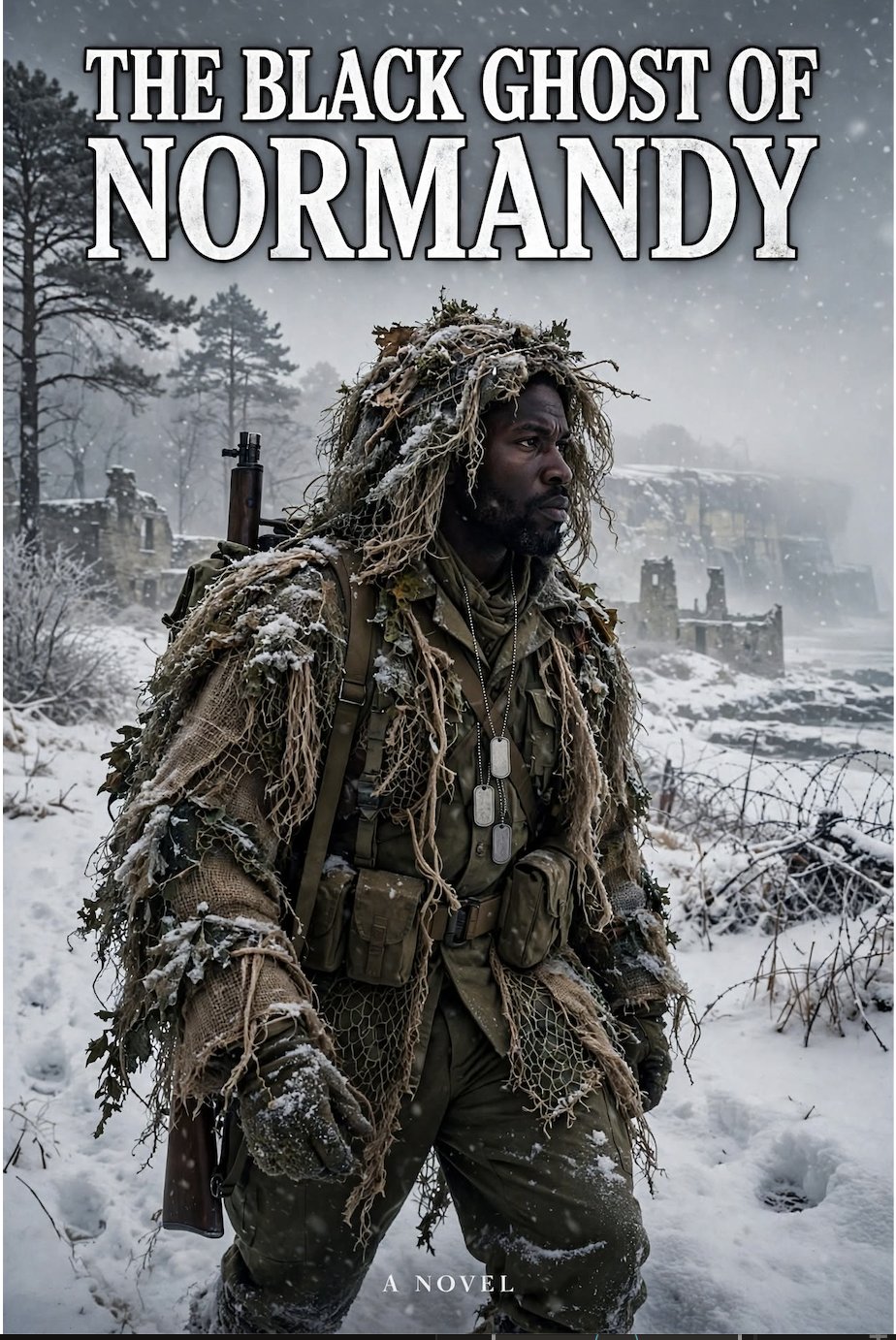
The Content Mill The headline they gave Jonathan Reyes to write was 12 Forgotten Black Heroes Who Deserve a Movie (#7 Will Shock You). He'd been staring at the number seven for the better part of an hour because he could not decide who deserved to shock people that morning. This was the work now, and it was not journalism. It was content, a word that had been beaten so flat it could hold anything you poured into it, which was precisely the point. He wrote to a template every time: a hook, a list, an affiliate link, and a sidebar of ads that quietly tracked wherever his cursor drifted. The pay came by the thousand words, and the words didn't have to be true so much as clickable, which he'd learned the hard way were sometimes opposites, right around the time the alimony started. He had owned a name once. Not a big one, a regional one, the kind that earned a nod at the right bar and a seat on a panel nobody watched. Then he'd run a story he hadn't nailed down, built on a source who wept on cue and documents he'd wanted too badly to be real, and the correction had run longer than the piece itself. In this business a retraction was a death you were made to attend over and over, at your own desk, for the rest of your life. So: number seven. He already had eleven. Bass Reeves, because everyone did Bass Reeves. Cathay Williams, who'd enlisted as a man. Robert Smalls, who had stolen a Confederate steamer, sailed it out to the Union blockade, and later gone to Congress, which was a better third act than most films managed. Real people, all of them, astonishing and under-filmed, and he could have filled a hundred slots without repeating himself. There had been a version of Jonathan, years gone now, who would have found that fact moving rather than merely useful. For number seven he went looking for something stranger, something with a little myth on it, because the algorithm loved myth. Myth made people argue in the comments, and arguing was engagement, and engagement was the only god the mill still worshipped. He typed Black soldier legend WWII into the search bar and let himself sink. Down past Wikipedia, past the museum pages with their careful citations, past everything sourced and sober, into the part of the internet where history goes feral: the forums, the reposts of reposts, a blog still running a template from 2009 with a live hit counter ticking in the corner like a heart that had never been told to stop. The post was called The Ghost of Normandy, and Jonathan read it the way he read everything now, fast and a little cruel, waiting for the tell that would let him close the tab. A Black sniper, it said. An all-Black regiment. A man hand-picked for a secret counter-sniper unit before the Normandy landings, the only Black man in a room full of white specialists, who had learned to vanish from an old Creek man near his father's farm in Mississippi. A man who could lie fifteen feet from a grazing deer in open ground and go unnoticed, who had walked into a general's headquarters and back out again without being seen, who had knocked out fourteen enemy positions in seventy-two hours by moving inches at a time. His unit was said to have logged five hundred confirmed kills. Eisenhower was said to have known his name. It was garbage, and it had the shape of garbage: the suspiciously round numbers, the famous names sprinkled in like seasoning, the lone genius doing the labor of a whole battalion. He knew that shape intimately, because he had built things in it himself, back when he was hungry and dishonest, two conditions he had come to understand were frequently the same thing. He moved his cursor to the corner of the tab, and then he did not close it. Because there was a sentence near the bottom, under the part where the man came home from the war, that did the one thing garbage never bothered to do. It undercut itself. No record of James Monroe Davis has ever been found, the blog said. The 366th's papers were scattered. Some say he was never real at all, just a story the men told each other to get through the nights. And some say that is exactly what they would want you to believe. Then, on its own line, with the counter ticking beside it: He was seen again. Recently. Jonathan sat back in his chair. The thing about a good lie, and he was, whatever else had gone wrong in his life, a genuine connoisseur of the good lie, was that it always resolved. It handed you the number and the name, closed the loop, and sent you off satisfied, and that satisfaction was how you knew you'd been had, because real life never closed the loop. Real life left it hanging and walked away. This one left it hanging. Whoever had written it built a beautiful, airtight legend and then, in the last breath, put a round straight through the wall of it. Then a second round: maybe none of this happened, and maybe someone needs you to believe it didn't. That was not how you wrote clickbait. Clickbait flattered you into sharing. This didn't flatter him at all. It dared him. He told himself he'd write a hundred and fifty words, drop them into slot seven with a breezy (you decide!) to cover the sourcing, and move on to slot eight. He believed that for the better part of a day. The byline was a handle rather than a name, fieldandmarsh, with no contact page and no biography, just eleven years of posts about half-remembered things: folk cures, drowned churches, a recipe for ash cake that ran to two thousand reverent words.
 ◯